
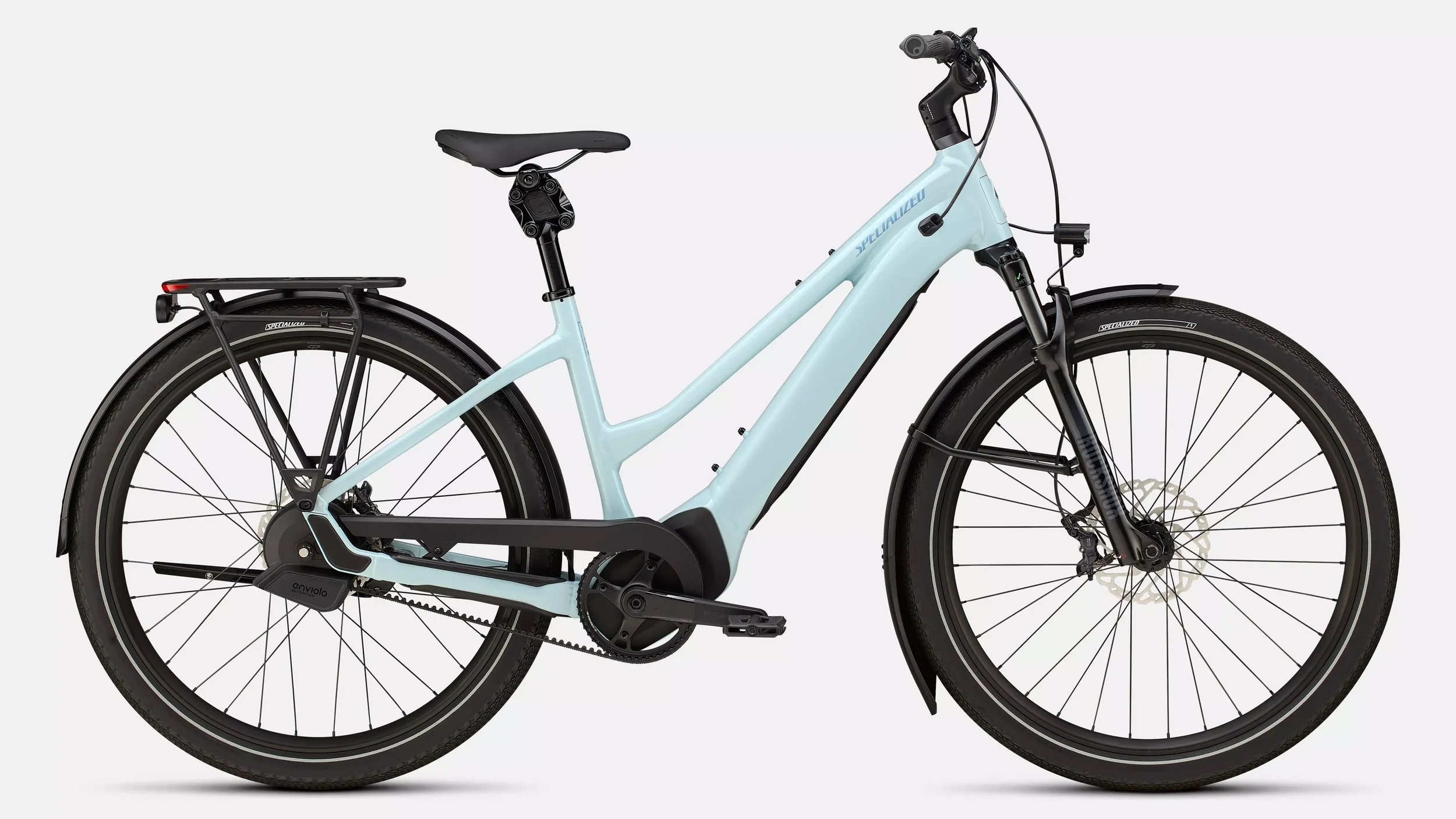
E-bikes have ushered in a new, inclusive era of cycling, allowing riders of all ages, abilities, and interests to get out and explore. From road e-bikes to commuter-style riders, electric bikes are by far the fastest-growing segment of the cycling industry. However, due to their complexity, they are also the most misunderstood and the hardest to compare. We put together our e-bike guide to make choosing the right ride a little easier!
What Is an E-bike?
Electric bikes are categorized as normal bikes with an electric motor and a rechargeable battery. This includes both manufactured e-bikes (built with an engine and battery at the factory) and add-on or aftermarket e-bike kits that convert a traditional bike into an e-bike.
The most common types of e-bikes are:
Pedal assist - The motor adds power when you push on the pedals, assisting your effort rather than doing all the work for you.
Throttle: Like a motorcycle, a throttle e-bike engages the motor whether you’re pedaling or not.
Most e-bikes with a throttle also have pedal assist, but not all pedal assist e-bikes have a throttle. That distinction is one of the key factors in how e-bikes are classified.
E-bike Classes: 1, 2, and 3
Most e-bike laws and regulations are based on e-bike classes, which group different types of e-bikes into three groups.
Class 1: These only have pedal assist, which means you need to pedal for the motor to work at all. Class 1 e-bikes are also capped at 20 miles per hour.
Class 2: These e-bikes have both pedal assist and a throttle, and most stop assisting at 20 miles per hour.
Class 3: These are pedal-assist only and max out at 28 miles per hour.
Michigan Laws on E-Bike Classes
E-bikes are legal in Michigan, and all classes are allowed on public streets, roads, bike lanes, and road shoulders. However, not all e-bike classes are allowed on recreational trails.
Class 1 e-bikes are allowed on any Michigan DNR trail open to traditional bikes.
Class 2 e-bikes are restricted on non-motorized trails except for riders with a disability.
Class 3 e-bikes are prohibited on all DNR non-motorized trails.
Most bike shops in Michigan do not sell Class 3 bikes, and many only offer Class 1 bikes.
Read More: How to Choose a Commuter Bike
How to Pick an e-bike: Know Your Roll
Choosing an e-bike largely depends on narrowing your choices based on a few questions:
Where do you plan to ride most of the time?
How long/far do you plan to ride on your normal ride?
How often do you plan to charge your bike?
Where Do You Plan to Ride Most of the Time?
We always recommend buying a bike (any bike!) that suits your daily riding, not an aspirational trip. If you primarily ride gravel roads or mixed surfaces, we recommend a gravel e-bike, which will allow you to ride roads, gravel, and two-tracks. Getting a road bike will limit your ride options due to tire width and stability. Conversely, if you only plan to ride trails, get a mountain bike e-bike and rent a road or gravel e-bike when you’re planning something different for a few days. Look at the road conditions and riding outside your door or your ride history, and get the bike that covers 90% of the riding you do most often!
How Long/Far Do You Plan to Ride on Your “Normal” Ride?
Like electric cars, one of the most important factors in choosing an e-bike is its battery size, which ultimately dictates its range. E-bikes are rated in Watt-hours (Wh). The lower the watt-hours, the smaller the battery and the shorter the range.
500 Wh: Roughly 20-45 miles per charge
750 Wh: Roughly 30-62 miles per charge
1000 Wh: Roughly 40-80 miles per charge
Why Do e-bike Ranges Vary So Much?
There are several factors that influence how much range your bike will have, even with the exact same battery.
Level: Most e-bikes have 2-3 assist levels that deliver varying amounts of power. Eco-mode may use a negligible amount of power, while riding on a high assist level (often called Turbo Mode) may use twice as much power.
Speed: Riding faster for longer periods, across assistance levels, will deplete the battery more quickly.
Terrain: Climbing hills or riding in gravel will drain the battery faster than riding on smooth flat roads.
Weight: Heavier riders or loading more cargo will also drain the battery faster.
Temperature: Cold temperatures can significantly reduce battery efficiency; riding the exact same route at the same assist level on a much colder day may drain the battery considerably faster.
In general, the longer your average daily ride, the bigger battery you need. If you plan to ride 2-3 hours on the weekend, totaling 50 miles or more, a larger battery will cover your desired range. If you’re riding 10-20 miles between charges, a smaller battery will be less expensive and cover your needs!
How Often Do You Plan to Charge Your Bike?
The final factor expands on ride duration with its opposite variable: how often will you charge your bike? If you commute 10-20 miles with a 500 Wh battery, you may need to bring your charger with you every day to ensure you get home with a little juice in the tank. Even if your battery can make the range, having a battery or range that offers a few extra miles means you won’t have to charge it every day; for example, if you forget to charge your bike, having a bike with more range means you can still get to work without being late instead of hopping on the bus.
e-bike Battery Safety Considerations
Low-quality, direct-to-consumer e-bike batteries have an increased fire risk that has previously caused property damage, injury and, tragically, death. We only sell certified, thoroughly tested batteries and motors to keep our customers safe. Always choose an e-bike that has been tested by a reputable industry organization, such as Underwriters Laboratories.
More e-bike Battery Safety Tips
Always follow the manufacturer’s instructions for charging your e-bike and storing your e-bike.
Don’t leave your e-bike charging when you’re not home or unable to check on it.
If you notice an odor, discoloration, or any noise from the battery, stop using or charging it immediately.
Keep batteries at room temperature; bring batteries inside during cold weather.
Shop e-bikes at Einstein Cycles
Einstein Cycles offers quality e-bikes from some of the most respected brands in the cycling industry, including Specialized, Salsa, Kona, Surly, TLG and more. We take pride in helping our customers find the right e-bike for how and where they ride, from all-day gravel epics to after-dinner spins on the TART. Get the selection and service you need to make an informed choice at our Traverse City, Cadillac, or Big Rapids locations today! (Tomorrow is probably okay, too.)