
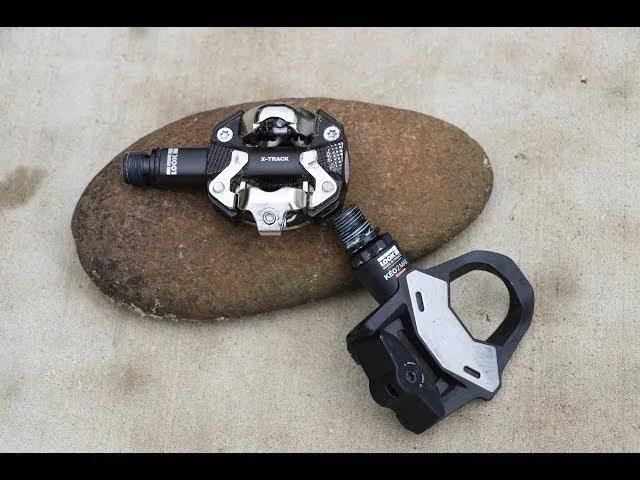
Road and mountain bike clipless pedals serve the same purpose, but achieve the result in very different ways. Both types of pedals will keep you firmly connected to your bike, providing more power and stability than platform pedals. There are key differences between MTB and road pedals that may make one the better choice for how and where you ride.
A Short History of Clipless Pedals
The first road clipless pedals debuted in 1984. Look, a French ski binding company, introduced a safe, relatively light, spring-based pedal that was far superior to the toe cages. That early design is still visible in most clipless pedals for road and mountain bikes. A strong spring provides tension to keep a shoe-mounted cleat “clipped” into the pedal. With sufficient force, the rider can twist their foot sideways to open the spring and remove their foot. That remains the basis of all clipless pedals to this day.
MTB vs. Road Pedals
While they share the same core concept, road and mountain bike pedals are quite different.
Road bike pedals are wider, slightly thinner, and have a triangular shape. They have a single-sided entry, since road riding rarely requires clipping in or out. The most popular types of road bike pedals are Look Keo and Shimano SPD road pedals, with Speedplay a niche option (albeit with a spirited group of loyalists).
The cleats that pair with road pedals are the same size as the pedal and are difficult to walk around it.
Mountain bike pedals are dual-sided, which means riders can quickly clip into either side without having to look down and rotate to the “right” side, as with a road pedal. Mountain bike pedals are rectangular and relatively open to prevent mud from packing into the pedal body and spring.
The most common types of mountain bike pedals are Shimano SPD, Crank Brothers eggbeater, and similar options from Look.
Shimano’s SPD pedal system is the most popular option for both road and mountain. While not quite universal, they’re as close as it gets in the cycling industry, which has many standards and dimensions. (And no, the pedal spindle isn’t different between road and mountain bikes. Both will work fine with your cranks!)
Are Clipless Pedals Better than Flat Pedals?
Clipless pedals are more efficient than flat pedals on both road and trail conditions. They offer more stiffness and stability for high-intensity sprinting, climbing, and technical riding. Contrary to what some riders think, clipless pedals don’t really let you “pull up” when pedaling; studies show the amount of pull most riders are capable of is minimal, often barely enough to offset the weight of their “rising” leg.
The benefits of clipless pedals increase with your riding intensity and duration. If you’re just riding around town or having fun, clipping in may not be worth the added expense of buying pedals and the hassle of changing shoes to ride.
Are Flat Pedals Better for Knees?
Flat pedals allow for more natural movement, which can reduce the strain caused by the fixed position of clipless pedals. Some riders new to clipless pedals experience minor knee pain or discomfort in the first few rides, largely from not being able to move their foot in the same way. Always mount cleats in a neutral position (center of the plate) and adjust the tension on your clipless pedals to allow as much float as possible so you can get used to it.
So, What Pedals Should I Get?
If you’re planning on long road rides at high intensity, invest in dedicated road pedals and shoes. If you’re a more casual rider, mountain bike pedals work just fine on road bikes and are easier to walk around in, making coffee stops much less awkward. Mountain bike pedals are also great for gravel bikes and mountain bikes, of course, because they fare better in mud and dirt and are easier to get into on the go.
Make Jump to Clipless Pedals Easy
Your local bike shop (hey, hi) will help you choose the best type of pedal for how and where you ride. We carry a full selection of road and mountain bike pedals from Shimano, Crank Brothers, Look, and other brands, so you’re never short of options. Get in touch for expert help finding the right pedals to upgrade your rig!